
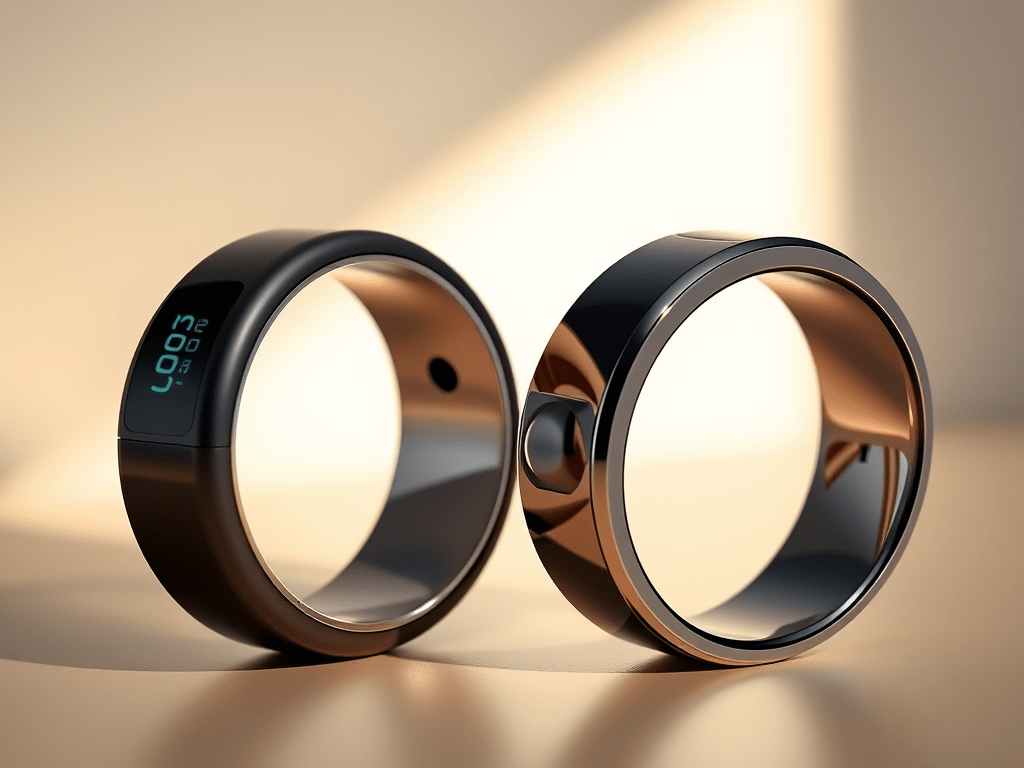
Fitness trackers have ruled wrists for years—counting steps, tracking sleep, and buzzing us into action. But in 2025, a sleeker contender is sliding onto the scene: smart rings. Leading the charge are the Oura Ring 4 and Samsung Galaxy Ring, two tiny titans promising big health insights without the bulk of a watch. Are they poised to dethrone traditional trackers? Let’s dive into why you might swap your wristband for a ring, weigh the pros and cons, and figure out who these gadgets fit best—all while peeking at what’s on Amazon now.
Why Smart Rings Might Be Your Next Obsession
Smart rings strip fitness tracking to its essentials: discreet, lightweight, and screen-free. No more wrist tan lines or midnight vibrations—just a subtle band that quietly logs your life. The Oura Ring 4 (launched October 2024) and Samsung Galaxy Ring (July 2024) pack sensors into titanium shells, tracking sleep, heart rate, and more, all synced to your phone. They’re not here to fully replace fitness trackers—yet—but they’re carving a niche for folks who want wellness data without the clunk.
- Oura Ring 4: It’s like a sleep scientist on your finger, with a redesigned app for long-term health trends. Think stress resilience, cardio age, and cycle tracking that’s FDA-cleared via Natural Cycles.
- Samsung Galaxy Ring: A minimalist marvel with AI-powered insights, it’s a wellness buddy that doubles as a phone controller—pinch to snap a pic. It’s all about simplicity and Samsung synergy.
Oura Ring 4: The Health Guru
Oura’s been perfecting smart rings since 2015, and the 4th gen is its slickest yet. At 3.3-5.2g, it’s smoother (no bumpy sensors) and lasts 7-8 days on a charge. It’s a holistic health tracker—sleep stages, heart rate variability (HRV), and body temp shine, with accuracy honed by recessed sensors.
- Pros:
- Class-leading sleep tracking—restfulness, deep sleep trends, you name it.
- Wide app integrations (Strava, Apple Health, 600+ more).
- Women’s health perks—cycle and fertility insights with no rival.
- Stylish: six finishes from silver to stealth black ($349-$499).
- Cons:
- Subscription ($5.99/month) unlocks full data—pricey after the $349 base.
- Weak workout tracking—auto-detects walks/runs, but no real-time stats.
- Bulkier than Samsung (7.9mm wide vs. 7mm).
- Best For: The wellness enthusiast or data nerd who’s all about sleep and recovery. You’re likely a woman tracking cycles, a meditator chasing HRV, or an iPhone user (it’s cross-platform). You don’t mind a fee for deep dives and might pair it with a watch for workouts.
Samsung Galaxy Ring: The Android Ally
Samsung’s first ring is a featherweight champ (2.3-3g) with a concave design to dodge scratches. It syncs with Samsung Health (free app, no sub needed) and boasts 6-7 days of battery life via a handy charging case. It’s less about fitness, more about 24/7 basics—steps, sleep, and heart rate—with Galaxy AI flair.
- Pros:
- No subscription—$399 gets you everything, no strings.
- Lighter and slimmer—comfy for all-day wear.
- Cool tricks: double-pinch for photos or alarms (Android-only).
- Ties into Samsung’s ecosystem—pairs with Galaxy Watch for extra juice.
- Cons:
- Android-only (sorry, iPhone fans).
- Sleep tracking lags Oura—less granular, occasional dropouts.
- Fitness tracking is barebones—no robust workout logs.
- Best For: The Samsung loyalist or budget-savvy Android user who wants simple wellness stats. You’re a casual stepper, a sleeper who hates fees, or a Galaxy phone owner who loves seamless integration. You’re not sweating hardcore gym sessions.
Are They Replacing Fitness Trackers?
Not quite. Smart rings excel at sleep and passive health tracking—fingers beat wrists for HRV and temp accuracy—but stumble on workouts. No screens mean no live stats; no GPS means your phone tags along for runs. Fitness trackers like the Fitbit Charge 6 or Galaxy Watch 7 still rule for exercise buffs with cadence, pace, and heart rate on demand. Rings are more companions than replacements—perfect for overnight data while your watch charges.
Why Now? What’s Next?
In 2025, smart rings are hot—Oura’s sold millions, and Samsung’s entry sparked a race. Months ahead, expect app updates: Oura might refine Labs (AI coaching), Samsung could boost Galaxy AI. By 2028, 6G-ready rings might stream AR workouts or sync with smart homes. They’re not just trackers—they’re lifestyle upgrades.
Pros, Cons, and Your Fit
- Oura Ring 4:
- Why You Want It: Unmatched sleep and health insights, premium vibe.
- Why You Might Pass: Subscription sting, workout woes.
- Your Type: Analytical, health-focused, happy to invest.
- Samsung Galaxy Ring:
- Why You Want It: Affordable access, sleek design, Samsung perks.
- Why You Might Pass: Android-only, lighter on depth.
- Your Type: Practical, Android-driven, low-maintenance.
Grab Them on Amazon
- Oura Ring 4 (Silver, Size 8) – $349
Sleep king with a subscription catch—sizes 4-15.
Buy on Amazon - Samsung Galaxy Ring (Titanium Black, Size 9) – $399
No-fee wellness in a slim package—sizes 5-13.
Buy on Amazon
(Placeholders—verify 2025 stock.)
The Bottom Line
Smart rings aren’t killing fitness trackers—they’re stealing the spotlight for sleep and subtlety. The Oura Ring 4 is your guru if you crave depth and don’t mind a fee; the Samsung Galaxy Ring is your wingman if you want ease and Android love. Both make wellness feel effortless—less wrist, more ring. Are they your new fitness fix? Maybe not fully, but they’re damn close.
Which ring’s calling your finger? Let us know below!

 Tech Gadget Hub