
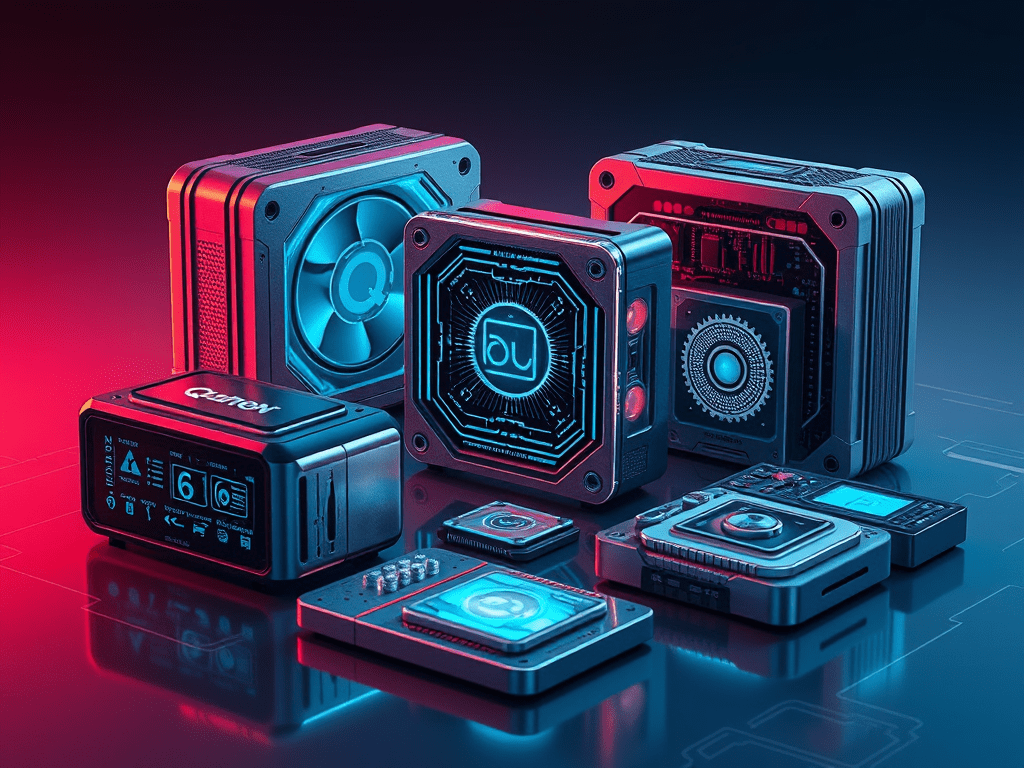
Quantum computing has long been the stuff of sci-fi dreams—machines that harness the weirdness of quantum mechanics to solve problems too tough for traditional computers. But in 2025, the question looms: are quantum gadgets finally trickling into our lives as consumer devices? Let’s unpack what’s happening now, what’s coming next, and whether this tech is already shaking things up—complete with a peek at what you can grab on Amazon today.
What’s Happening Right Now?
As of March 2025, quantum computing isn’t sitting on your desk or in your pocket—yet. It’s still mostly confined to labs and data centers, with companies like IBM, Google, and Amazon Web Services (AWS) pushing the boundaries. The focus has shifted from raw qubit counts (the quantum version of bits) to usable, error-corrected “logical qubits.” Think of it like moving from a clunky prototype car to one that can actually drive on the highway. Recent breakthroughs—like Google’s Willow chip showing “quantum supremacy” on a test problem late in 2024—hint that we’re getting closer to practical applications.
Is it affecting anything today? Yes, but indirectly. Quantum research is already influencing fields like cryptography, drug discovery, and AI optimization. For instance, pharmaceutical companies are testing quantum algorithms via cloud platforms to model molecules faster than ever—think new drugs hitting shelves sooner. Financial firms are experimenting with quantum models to spot market trends. But for the average person? You’re not plugging a quantum gadget into your wall just yet. The tech’s still too big, too cold (requiring near-absolute-zero temperatures), and too niche for home use.
What to Expect in the Coming Months
Over the next 6-12 months, don’t expect a quantum laptop at Best Buy, but watch for more accessible tools. Cloud-based quantum services—like IBM’s Qiskit or Amazon’s Braket—are expanding, letting developers and hobbyists tinker with quantum algorithms from their regular PCs. By late 2025, we might see hybrid devices emerge: think a high-end PC with a quantum co-processor for specific tasks, like cracking complex math or boosting AI. Companies like Rigetti and IonQ are scaling up their hardware, aiming for systems that need less babysitting (fewer PhDs required to run them).
Consumer impact? Look for early adopters—gamers, coders, or DIY techies—getting their hands on quantum-inspired kits. These won’t be full quantum computers but could be simulators or educational tools to play with quantum concepts. Think Raspberry Pi, but for quantum geeks.
What’s Coming in the Next Few Years
Zoom out to 2026-2030, and the picture gets wilder. Industry roadmaps from IBM (targeting 1,000+ qubit systems by 2026) and Google (aiming for a million qubits by decade’s end) suggest we’re nearing a “ChatGPT moment” for quantum tech—a breakthrough that makes it mainstream. By 2027, we might see the first consumer-facing quantum gadgets: maybe a handheld device for ultra-secure communication (quantum cryptography) or a plug-in module for your gaming rig to supercharge physics simulations.
For the everyday user, expect indirect perks first. Quantum-powered AI could mean smarter Alexa-like assistants or faster Google searches. In logistics, companies like Amazon might optimize delivery routes with quantum algorithms, shaving time off your Prime shipments. By 2030, if costs drop and miniaturization kicks in, a “quantum dongle” for your PC—boosting specific tasks like encryption or data analysis—could hit the market.
Current Impact and Amazon Finds
Right now, quantum computing’s ripple effect is more about inspiration than direct use. It’s driving innovation in related fields—like better classical processors or AI chips—that are in consumer hands. Want a taste of what’s influenced by quantum research? Here’s what you can snag on Amazon today:
- Raspberry Pi 5 – $79.99
Not quantum, but a stepping stone. Use it to run quantum simulators like Qiskit and dip your toes into the quantum world.
Buy on Amazon (placeholder—check for latest model). - External SSD (Samsung T7, 2TB) – $199.99
Quantum algorithms need big data to shine. Pair this with a PC to handle the datasets quantum cloud services churn through.
Buy on Amazon. - AI-Powered Smart Speaker (Echo Dot 5th Gen) – $49.99
Quantum’s boosting AI research behind the scenes. This isn’t quantum itself, but its voice tech owes a nod to those advancements.
Buy on Amazon.
These aren’t quantum gadgets—true consumer quantum devices don’t exist yet—but they’re the closest you’ll get to riding the wave today.
Who’s This For?
- In Months: Hobbyists and students eager to experiment via cloud platforms.
- In Years: Gamers, privacy buffs, and early adopters who’ll snatch up the first quantum-enhanced gear.
The Bottom Line
Quantum computing gadgets aren’t “here” for consumers in 2025, but the groundwork’s being laid. Months from now, you’ll see more tools to play with it remotely; years from now, it might sit on your desk. For now, it’s quietly revolutionizing industries behind closed doors—think faster drug trials or sharper AI. Grab a Pi, mess around with quantum code, and stay tuned: the quantum age is creeping closer.
What’s your take—ready to quantum-up your setup? Drop a comment!

 Tech Gadget Hub
Leave a comment